Theism is most narrowly defined as the belief in divine power or a 'God', but one might expand that idea to consider that it refers to a person's values, beliefs, inclinations, social views and even their morality.
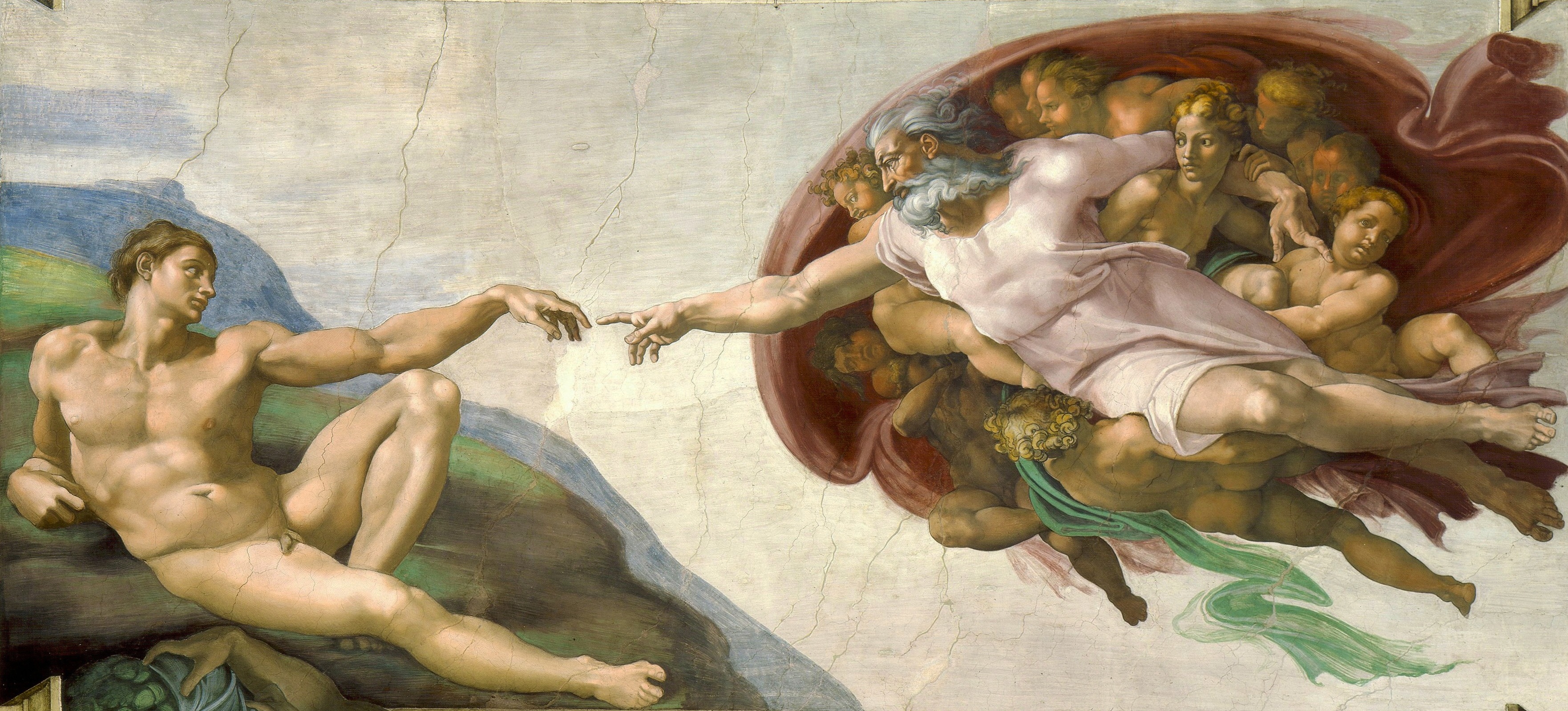
The said values and beliefs do not exist in isolation but in association with one's theism. That is to say, there are no standards to which values are universally 'good' or 'bad' because the theism that one identifies with tends to govern that interpretation.
Sceptics offer much criticism to those who carry a strong sense of theism, due to the supposed lack of material evidence of the existence of a spiritual power. By the measure of everything we consider to be true in the physical world, this critique endures to invalidate the billions of people around the world whose actions are guided by their theism. They assert that if one operated sans their faith, they would still be the same kind of person. A counter-argument to this is, of course, that without a cultural or theist dictation of what is 'good' and what is 'bad', one would be confused, misguided or more vulnerable to doing 'bad' things. Contrarily, people who follow a god or a faith are presumably more likely to do 'good' things.
Bertrand Russel, a British (Atheist) Philosopher, famously stated that “Cruel men believe in a cruel god and use their belief to excuse their cruelty. Only kindly men believe in a kindly god, and they would be kindly in any case.” This perspective alternatively argues that one's theism does not allot them a set of values, but rather, one seeks out a faith because it aligns with their existing set of values. This would propose that we pursue in faith what we learn from our environments. Any faith that orients itself with what we have learned to appreciate from the people around us, is our theism.
Hence, we consider that one's theism does in fact administer one's behaviour, and shape one's perspective. And one's lack of theism acts just the same way.
~ Aanya Chand